The ever-present risk of a malpractice suit can plague all of us who see patients. How do we think about that and manage the risks of professional liability?
Physicians are skilled risk managers. We help each patient make personal medical decisions that reduce their risk of bad outcomes. We help them understand their risks and respond with mitigating behaviors, be it surgery, medication, or lifestyle.
Likewise, we manage our liability risk through our professional behaviors. We listen to know our patient. We inform them, and we listen to understand their expectations and their comprehension.
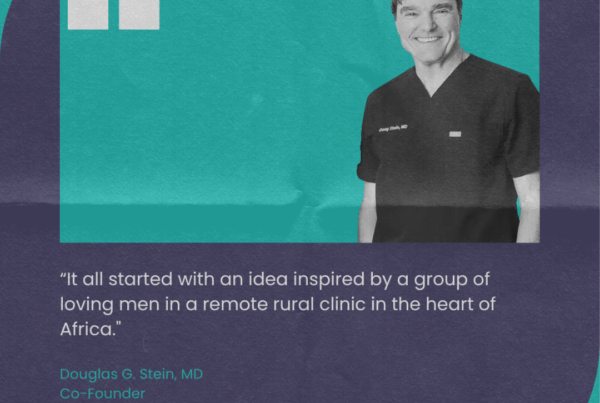
Managing risk does not eliminate risk, nor bad or unexpected outcomes. We prepare for the worst and help patients prepare by understanding and managing their own expectations. Doug Stein once said “never assume that your next procedure won’t be the worst of your career.” How prescient.
My colleague, Dr. Kelly White, describes in a recent post to the Vasectomy Google group, excerpted below, his approach to post vasectomy pain. Perhaps Kelly’s focus toward patient well-being indirectly reduces risk of a malpractice suit, without even a thought to liability.
“In many ways it boils down to trust. Physician behaviors that strengthen trust will decrease anxiety and that will decrease pain. As for post vasectomy pain management, for me it starts even before the vasectomy is performed.
In patients with risk factors I will recommend against vasectomy or at a minimum that their scrotal pain be resolved prior to considering vasectomy.
Having superior patient management skills is critical. Listen, validate and act on any complaints. There is no management of vasectomy related pain without management of fear and anxiety.
If it hurts, reestablish consent and give more anesthesia early.
Be available. Call patients back promptly. Be prepared to see patients for a follow up visit when necessary or just because they are worried. Call them to follow up until they are back to normal.
Give patients a clear idea of what to expect as far as the expected course of recovery. Epididymitis and granulomas resolve slowly and can wax and wane during recovery. If a patient knows that they can expect their recovery to be “like a rollercoaster going down hill” with ups and downs but overall gradual resolution they won’t panic when they have a mild exacerbation.”
It is undoubtedly good luck that I was never sued in my medical practice, whether as a university attending overseeing students and residents, an active OB provider for 20 years, a primary care physician, or a sub-specialty surgeon doing just vasectomies for 37 years. Perhaps more remarkably, there was never a threat of a lawsuit nor a demand for compensation or apology when things went wrong. Nothing can guarantee you won’t get sued, but I think you don’t need to spend time worrying about it.
If you’re reading each patient for their likelihood to sue you, you’re reading them wrong. Instead read them to understand who they are, what they need, and how you can serve their needs. Communicate on their terms, and tell them how you will help them. Set expectations realistically.
I suspect that every malpractice claim starts not necessarily with a medical error, but with unmet expectations. While the unexpected outcome is the cause of the claim, the perceived wrong is that the care, compassion, and accountability shown did not meet patient expectations.
So setting expectations is fundamental to physician practice. Exceeding expectations is the daily work of the physician and their entire staff. If the staff comes to work every day focused on serving their patients’ needs and the physician comes to work to serve their patients and serve their staff’s needs, then you have a good start on preventing lawsuits. (Kelly famously told me his secret to success in his prior group practice: “I work for my staff.”)
Since every physician is likely to make some mistakes on any given day, to achieve excellence one must learn HOW to make mistakes, as counterproductive as that may sound. First, know what mistakes you cannot afford to make. Develop systems, like checklists for example, to avoid those irreversible, maybe catastrophic mistakes. Think of the first thing you warn a trainee about when teaching a procedure, for example. What should they never do?
Second, learn from your mistakes — even the tiniest of misstep contains a valuable lesson that can help you achieve excellence. When you make mistakes, notice them, own them, apologize, and mitigate. Most importantly, integrate the correction systematically to prevent repeat errors. What a tragedy it is to overlook or to deny something that could help you and your patients so much going forward. I like to astonish my staff by saying, “I love to hear our mistakes,” because Continuous Quality Improvement demands that we find ways to continue improving, and each mistake is a rough spot that we can polish up.
A physician who apologizes with sincerity and the humility of a caring and devoted servant to their patient is less likely to be sued, even when an error was made. Apologize and take accountability for your staff’s error. Let patients and staff know who you are and what you care about. Honesty, integrity, humility. I think those are the elements that will protect you best from retribution by unhappy patients.
And you will have unhappy patients, because their expectations will not have been fulfilled to their liking. Often it will not even be a mistake on your part. It may be their insurance coverage that your staff explained to them, or some regulatory constraint on you or on them, or just a bad day. It is not by our best performance, but in how we respond to such adversity that we will be judged.
So, prepare for adversity — every day, every procedure. Like a “safety pause” on a construction site*, take a second with every patient encounter to check yourself before delivering your best patient experience.
*Task-level safety pause: A brief last check immediately before a critical operation to confirm conditions, controls, roles, and readiness.
A good mental exercise is to envision yourself for the next 6 to 18 months on frequent intimate phone calls and visits with the new patient in front of you to support him and his family through the course of an unexpected complication of the procedure you are about to do. Ask yourself if you are prepared for it.
At a welcome event for World Vasectomy Day leaders arriving in Mexico City, my colleague stepped away from a VIP conversation to speak with a very important person–his surgical patient, to whom he had given his cell phone number. I bet that patient was a lot less likely to sue over his complication, because his doctor answered the phone.
The greatest affirmation for a physician might come when that patient whom you shepherded through the worst complication ultimately refers others to you for your exceptional quality care.
One approach to excellence attributed to Walt Disney is simply, “do what you do so well that people can’t help but tell others about you.”
The mantle of a physician gives one at once the greatest privilege and the most onerous responsibility for the patients whom you serve. It is both exhilarating and exhausting to carry the burden and to face the expectations of your role. You are judged on your patient’s expectations and society’s, but mostly your own. Accept imperfection; strive for excellence.
You cannot help but fail. So you must be good at that. I say it out loud, “today I will wake up and make mistakes.” What a relief it is to accept that you are human and fallible. Now you can start dealing with the challenges of the day and realistically manage risk.
Medicine is risk management — just like everything else you do in life. I think that every decision in life can be expressed in a risk management equation. We are driven toward self-fulfillment and gain, but the agony of defeat lurks over us. We are averse to criticism and loss, but without taking risks, we cannot excel and reap rewards.
Early in my practice, I earned a pilot certificate. I think that I learned the most about risk management from the time tested protocol for basic flight training. Nowhere is it so apparent that there are mistakes you can afford to make and others you must never make, as in flying aircraft. It all changes when you take to the air. So before you take off, you learn to go through a checklist of all the mistakes you mustn’t make. You check off fuel, tires, radios, control surfaces, etc.
Because it is easy to get distracted by all the activity and variables around air travel, weather, passengers, etc., you learn a discipline of focus on the ritual of the checklist. If one thing interrupts, you patiently start over to ensure completion of every critical item.
In my family practice office, even though I knew my procedures all by heart, I started writing down in a manual every procedure we did in the office and created concise checklists for the staff and myself. I realized that this was a key to excellence.
Checklists have now become common in medicine, and especially in preparation for surgery, which is a little like an airplane flight. And this morning, after 40 years of flying, I again took a biennial flight review with an instructor who tested me on knowledge and skills, especially in unexpected situations, like gliding to a safe landing without power. You’re never too old or too good to practice and to learn more.