This article was originally published by our partners at FP2030. Read the original here.
The FIFA World Cup is watched by 5 billion of the planet’s 8.3 billion people, making it one of the greatest global unifiers.
By Samukeliso Dube, Jonathan Stack, and Alison Hoover
As the world watches the 2026 World Cup, we call on those 5 billion people–governments, reproductive health advocates, healthcare providers, families, communities, and partners across sectors–to unify and reaffirm family planning as a fundamental human right. Protecting and advancing this right requires the active participation of every person, every community, and every player.
The stakes for family planning have rarely been higher. 214 million women of reproductive age in low- and middle- income countries want to stop or delay having children but are not using contraception. This is an immense unmet need for family planning, yet the environment surrounding sexual and reproductive health is growing increasingly restrictive. Funding cuts, disease outbreaks, and political movements are reshaping conversations about family planning. And amid this pressure, the temptation to retreat into silos threatens to weaken the field further.
Family planning is one of the smartest investments in global health. Every dollar invested yields nearly $27 in health and economic returns, and expanded access to contraception in developing countries has contributed to a 40% reduction in maternal mortality. But family planning is about more than metrics. It is about freedom to decide if, when, and how to have children. For this freedom to endure, it requires a playbook and consistent communication. It is about partnership within families and among communities, and as with any team, every player must show up and play their part.
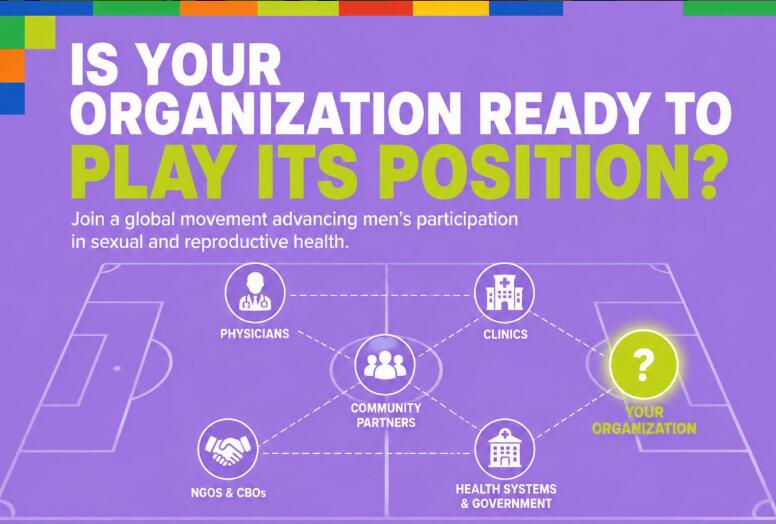
Bring the full squad. Family planning is strongest when it’s inclusive: inclusive of women, men, non-binary and transgender people; of all contraceptive methods; of every layer of the health system. Family planning requires shared responsibility, but women have carried a disproportionate amount of that responsibility for too long. Men must step forward as equal partners, participating in contraception and supporting informed choice and bodily autonomy. And the family planning community must make space for an inclusive definition of family planning users, with tailored services and a diverse method mix.
The reproductive health sector has understandably turned toward the language of efficiency. Limited resources demand that we maximize every investment. But efficiency is not just about delivering more commodities at lower cost or counting outputs in isolation. The most effective teams coordinate their efforts. Governments, donors, clinicians, advocates, and communities each bring unique strengths to the field. When they work together, resources stretch further, services become more responsive, and progress accelerates. Real efficiency is found in partnership. No one wins the match alone, and no one wins when players stay on the sidelines.
Coordinate the midfield. Too many populations remain underserved, including young people, rural communities, those in fragile settings and on the political margins. Better midfield coordination means connecting stakeholders, strengthening referral systems, and moving services across the field. Where opposition is growing and funding is being sidelined, we must also play offense: raising our voices and mobilizing the masses to expand access and reposition family planning as essential to health, resilience, and development.
Midfield coordination also extends beyond the health sector. Schools, faith leaders, employers, and community organizations all shape reproductive decision-making and can help create environments where people are able to exercise informed choice.
Don’t go where the ball is; go where it is going. The current moment is difficult, but it is not permanent. The future of family planning will belong to those who can anticipate where the field is moving, which will require new financing models, stronger domestic investment, locally led solutions, technological integration, and coalitions that extend beyond the traditional reproductive health sector.
The World Cup is never won by individual brilliance alone. It is won through coordination, trust, strategy, and a shared commitment to the singular goal. Family planning is not a sprint for quick wins. It is long-term work embedded within health systems, economic development, gender equity, and human rights. It is like investing in a young football squad: the returns are guaranteed, but they take time. It means staying focused on ensuring that every person has the knowledge, services, and means to make informed decisions about their reproductive lives. It means investing national budgets into family planning services. That is the goal. That is how we score.
We call on governments, philanthropies, multilateral institutions, and development partners to increase and sustain investments in family planning and reproductive health at a moment when millions are facing increasing barriers to care. But this is ultimately a call for creativity, connection, and collaboration. Every pass matters. Every player matters. Every opportunity to work together matters. Family planning is a team sport. And if we are willing to trust one another, coordinate better, and keep our eyes fixed on the goal, we can still move the field forward together.
Football is a beautiful game. So is life.
The world is counting on us to play it well.
Join the movement. Register for the World Vasectomy Cup live broadcast on July 17th here.
Originally published on FP2030.org.