By John Curington
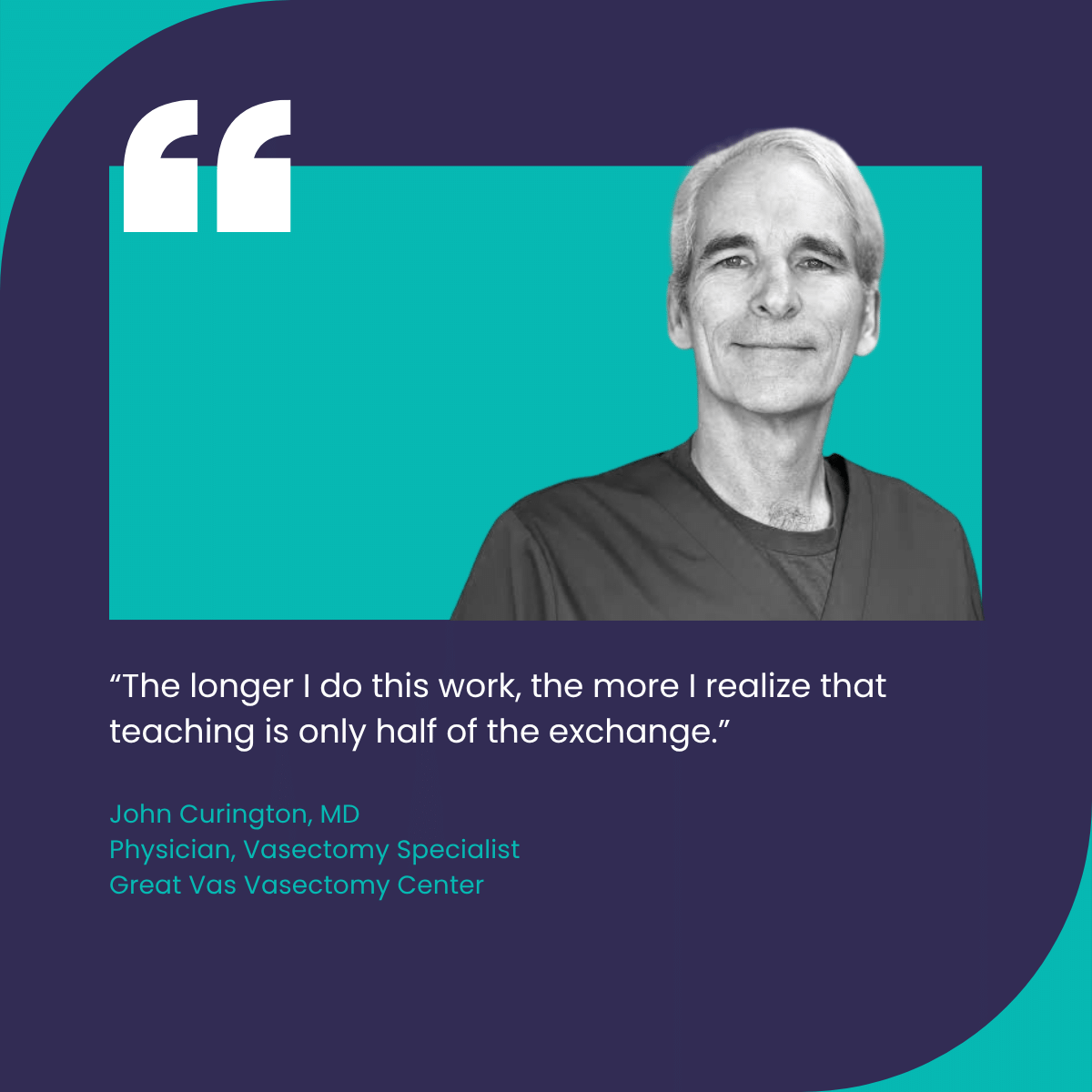
I’ve been thinking lately about what it means to be a volunteer physician with World Vasectomy Day. On the surface, we travel around the world teaching gentle, no-scalpel vasectomy to colleagues who invite us into their clinics. But the longer I do this work, the more I realize that teaching is only half of the exchange. We learn just as much from the physicians and communities we visit, and the strength of our movement is in direct correlation to the collective wisdom of our community.
In September, we organized an online seminar to help our colleagues navigate medical malpractice and lawsuits. Wanting an international perspective, we invited Dr. Sophie Nicholls, an experienced vasectomist and teacher from the UK, to join us. Working with Sophie was a pleasure. She introduced us to the British legal system, but more importantly, she shared her thoughtful approach to patient-centered care – and the ways that excellent medical care and compassionate communication can help prevent problems before they begin.
To expand the pool of doctors joining future missions, this coming November 22, I’ll travel to England to give two talks with my longtime mentor and friend, Dr. Michel Labrecque. Michel and I have taught and performed vasectomies together in Bolivia, Mexico, Argentina, Zambia, and El Salvador, and I always return from our time together having learned something new. We know there are many others out there who would equally benefit from these experiences.
In the UK, we’ll discuss fascial interposition and the evidence supporting the technique, as well as train British physicians to teach with the VasectoPro scrotal model. We’ll also visit Dr. Martin Kittel’s clinic and spend time with other British vasectomy physicians. We have no illusion that our way of doing things is the final word in medicine, but our intention is to standardize our teaching methodology for our global trainees. In the end, we are there to share what we know, remain curious about how others practice, and continue learning from one another. For me, the key to being a good doctor, as well as being an effective volunteer with World Vasectomy Day is knowing that teaching relationships are never one-way.